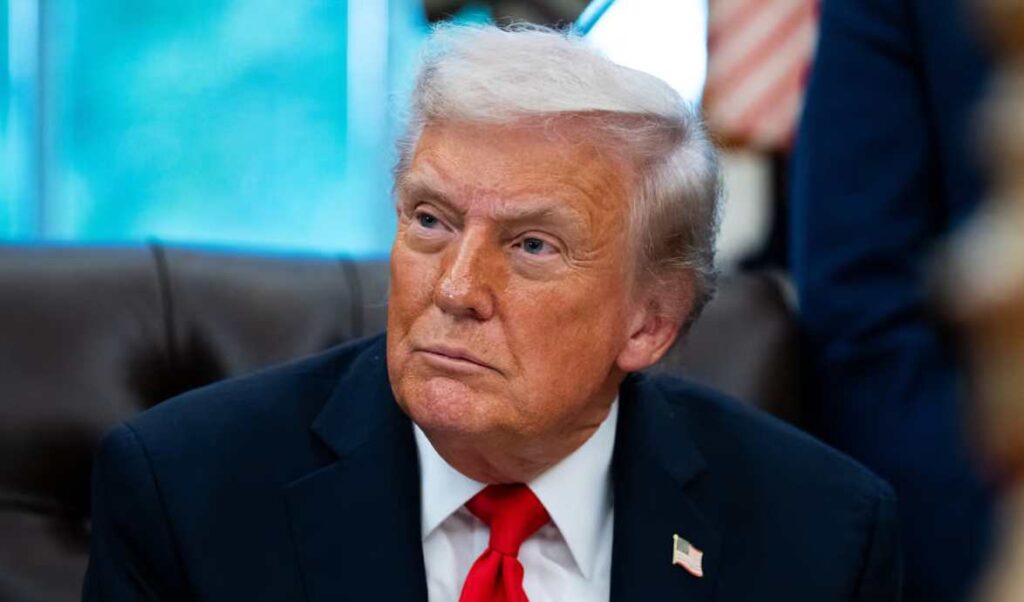
Venezuelan-American communities in Florida, one of Donald Trump’s strongest immigrant voting blocs, are waking up to a bitter reckoning after the Trump administration launched what it called a “large-scale military operation” against Venezuela — a country many of them fled while still maintaining deep family, financial, and emotional ties.
President Trump announced early Saturday that Venezuelan President Nicolás Maduro and his wife had been “captured and flown out of the Country” following what he described as a U.S. military strike on Caracas and other strategic locations. Explosions were reported across the capital, and U.S. officials told CBS News that Delta Force, an elite special operations unit, carried out the raid.
The operation followed months of escalating U.S. military activity in the Caribbean, including the deployment of the USS Gerald R. Ford aircraft carrier, multiple warships, and repeated seizures of Venezuelan oil tankers. In recent weeks alone, U.S. forces struck what Trump called “the dock area where they load the boats up with drugs” and launched deadly attacks on more than 30 boats the administration claimed were used for trafficking.
For Venezuelans in Florida — particularly in Miami-Dade, Broward, and Orlando — the shock is especially jarring. Many supported Trump in 2024 because he promised to keep America out of foreign wars, branding himself as the anti-interventionist alternative to Democrats. That promise was central to his appeal among conservative Latin American exiles who feared U.S. entanglements abroad.
Instead, they are now watching U.S. bombs fall on the country many of them left behind.
“This feels like a cruel joke,” said one Venezuelan-American community organizer in Miami who voted Republican in 2024. “We were told there would be no new wars. Now our families are hiding from explosions.”
A Republican senator said Secretary of State Marco Rubio told lawmakers that Maduro would face criminal charges in the U.S., where he was indicted years ago, and that Rubio “anticipates no further action in Venezuela.” But the presence of U.S. warships, airstrikes, and special forces has made those reassurances ring hollow.
The White House insists the operation was not a war but a law-enforcement action aimed at drug trafficking and terrorism. The administration has long accused Maduro of working with gangs and narcotics organizations, charges he denies. Still, critics point out that the scale of military involvement looks indistinguishable from a full-blown intervention.
Under the War Powers Resolution of 1973, the president can deploy U.S. forces without congressional approval, but must notify Congress within 48 hours and withdraw within 60 days unless lawmakers authorize continued action. So far, no such authorization has been announced.
Online, the reaction has been scathing — especially from Trump’s own supporters. “Nothing like starting a war to distract fools from the Epstein files,” one viral post read. “Wag the dog.”
Another wrote: “The White House has become the center for lies and corruption. It’s now an institution for the criminally insane.”
A Russian user commenting on Reddit compared Trump’s behavior to authoritarianism back home: “I am from Russia and since Trump is in office I feel a lot of things in US going very similar to how it was there… I left that bullshit in Russia to live normal life and here I am under Trump same shit.”
Others rejected the idea that the strike was really about drugs or Maduro at all. “They genuinely believe that this is about drugs or Maduro. That is just fucking insanely naive,” one post read. “Venezuela has some of the largest oil reserves on the planet… This will also strengthen defense contractors like BlackRock, Palantir, Lockheed, Boeing, and JP Morgan.”
The post continued: “They really elected the ‘no new wars’ mango Mussolini.” Even within conservative online spaces, users have begun twisting language to defend the administration. On right-wing forums, posters insist this is not a war but merely a “military operation,” echoing rhetoric historically used to downplay foreign interventions.
For Venezuelans who cast their ballots for Trump believing he would keep America out of global conflict, the irony is hard to ignore. Their votes helped return to power a president who campaigned on peace — only to see U.S. forces deployed against their homeland. Once again, the leopards have eaten the faces of the people who fed them.