
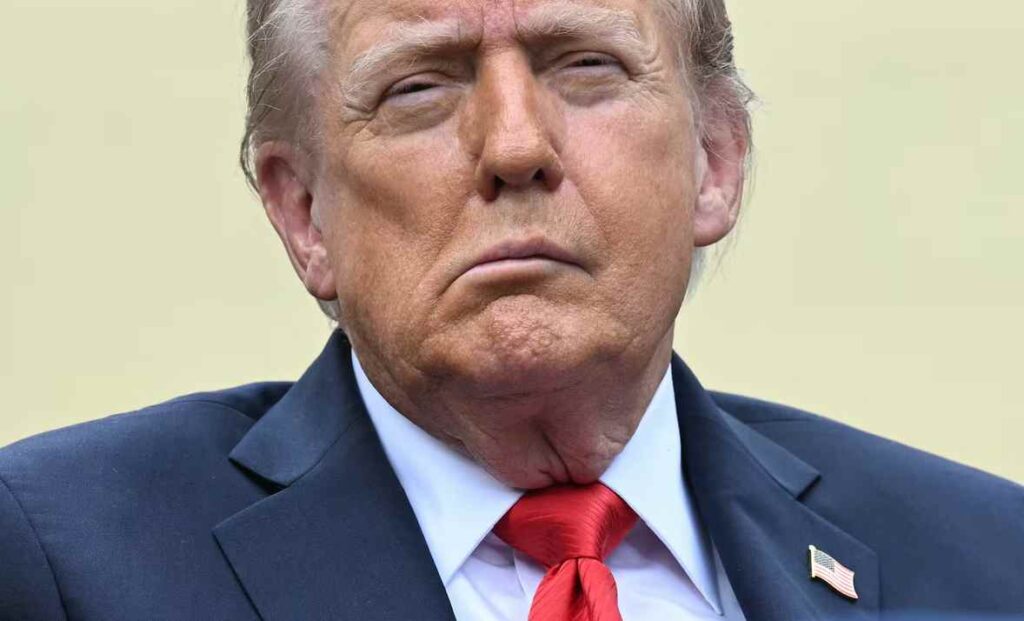
U.S. President Donald Trump says fertilizer shipments coming from Canada could face steep tariffs in the future as his administration rolls out plans aimed at supporting American farmers dealing with prolonged trade instability.
Trump made the remarks during a roundtable in Washington on Monday, shortly after unveiling a US$12-billion agricultural aid package. When asked how his administration intends to strengthen domestic fertilizer production — much of which is sourced from Canada — the president signaled potential trade action.
“A lot of it does come in from Canada, and so we’ll end up putting very severe tariffs on that, if we have to, because that’s the way you want to bolster it here and we can do it here,” said Trump.
The renewed attention on agriculture arrives as many U.S. farmers face difficulty marketing crops and planning ahead amid an extended trade dispute with China, along with ongoing uncertainty involving key allies such as Canada.
U.S. Agriculture Secretary Brooke Rollins said at the same event that reducing reliance on foreign fertilizer supplies is a priority for her department. Still, American growers remain heavily dependent on Canadian potash-based fertilizers used for crops including corn and potatoes.
Canada ranks as the world’s largest potash producer, exporting more than 95 per cent of its output, according to Fertilizer Canada. The industry group also reports that “well over half” of all Canadian fertilizer exports are destined for U.S. farms.
For Veronica Nigh, senior economist at the U.S.-based Fertilizer Institute, Trump’s latest warning brings back familiar concerns.
“It feels a little bit like déjà vu.”
“It feels like we had to explain to the world how important Canadian reserves and exports of potash globally, and specifically to the U.S., were earlier this year when we were talking tariffs, and so of course this is not a welcome comment from the president,” she told CTV News Channel Tuesday.
Earlier this year, after Trump imposed sweeping 25 per cent tariffs on Canadian goods entering the United States — prompting retaliatory action from Ottawa — fertilizer prices surged on both sides of the border.
Between Jan. 3 and Feb. 28, potash prices climbed from US$303 per short ton to $348 amid repeated tariff announcements and threats, Reuters reported in March.
The spike placed additional pressure on farmers throughout the U.S. Midwest preparing for spring planting. In March, following criticism from agricultural groups and lawmakers in predominantly Republican farm states, Trump reduced tariffs on fertilizer products to 10 per cent.
“As all Canadians know, and most Americans I think at this point, the U.S. is incredibly reliant on Canada for our potash needs which (contains) one of the three critical nutrients every plant needs,” Nigh said.
“And then there’s a lot of cross-border trade that occurs in many other fertilizers that are really beneficial both to Canada and to the U.S. and the growers on both sides of the border.”
Nigh added that reinstating higher tariffs on Canadian fertilizer would translate into higher input costs for U.S. farmers. She also pointed out that domestic potash production in the U.S. is limited, and few allied countries supply it at scale.
“On the side of potash, of course there are only three major exporters in the world; Russia and Belarus are the other two sources of major potash reserves,” said Nigh.
“I think most Americans would agree that we’d much rather get our potash from our friends in Canada than from Russia and Belarus, so it would certainly mean some pretty significant changes I think in the flow of product to the U.S. and it’s hard to really see an upside.”
While diplomatic ties between Ottawa and Washington have shown signs of improvement in recent months, a comprehensive new trade agreement has not yet been finalized.
When asked Sunday whether trade negotiations with Canada — which he suspended indefinitely in October — would resume, Trump replied: “We’ll see.”