
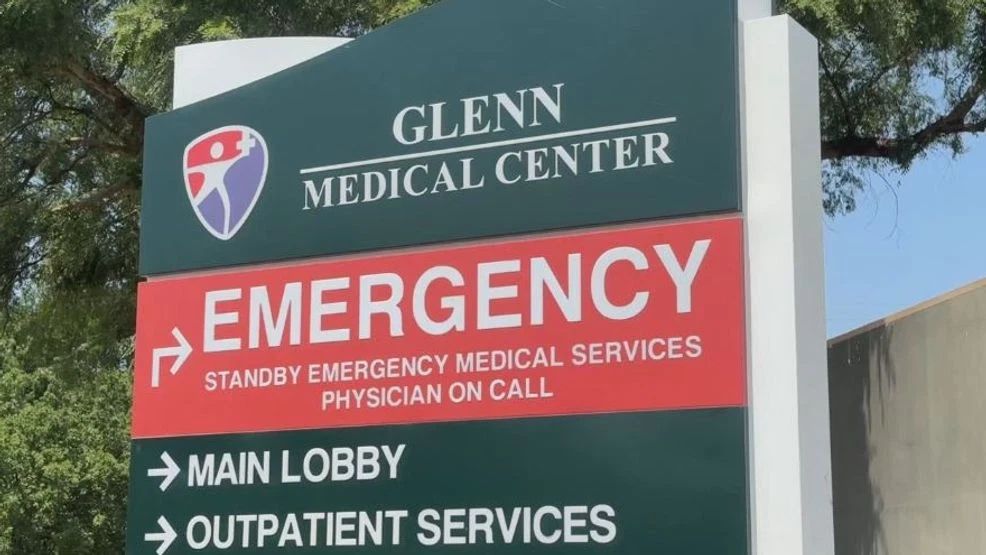
After more than two decades of service, Glenn Medical Center — the only hospital in Glenn County — is set to shut down after losing a key federal designation, sparking anger and disbelief among local residents, many of whom now say the political choices they supported have come back to hit them directly.
In this deeply Republican-leaning rural county, frustration is boiling over as families realize the consequences of federal policies under President Donald Trump are no longer abstract — they are personal.

Hospital officials warn the closure will leave residents facing 30 to 40 minute drives for emergency care, a delay that can mean the difference between life and death.
“Rural healthcare is a different animal, and I say that because we struggle with the lack of resources. And what that means is that we build resilience,” said Liz Bethard, a leader at the facility. That resilience, she said, is now being stretched to a breaking point.
The Centers for Medicare and Medicaid Services (CMS) recently stripped Glenn Medical of its “critical access hospital” designation. Under federal rules, hospitals must be at least 35 miles apart — but Glenn Medical is measured at 32 miles from Colusa Medical Center, a technicality administrators say they were never even aware of.
“For all these years, we had no idea that we were not within those regulations,” Bethard said. The result is catastrophic: a 40% funding cut that the hospital simply cannot survive. Bethard said CMS used Google Maps to calculate the distance, relying on a route that floods regularly and is not even used by ambulances.
“They are essentially measuring them off of Google Maps and saying the primary road says you are 32 miles, not 35. And so, we try to tell them that is not the road that the ambulances take… it didn’t matter,” Bethard said.
The emergency department will close Sept. 30, with the rest of the hospital expected to follow. Clinics and records will remain temporarily, but emergency care — the lifeline of the community — will disappear.
In a county already struggling with poor healthcare access and some of the worst health outcomes in California, the impact is immediate and severe. Many residents are elderly, low-income, or lack transportation — the very people most at risk.
“If you have a heart attack, if you have a stroke, anything like that, it’s 30 to 40 minutes away,” Bethard said. “And with our ambulances being so limited, it’s going to be a struggle to even get an ambulance to come and help.”
Behind the scenes, residents are expressing a bitter realization — that the policies and political figures they backed are now directly affecting their ability to survive emergencies. The “leopards ate my face” sentiment is becoming unavoidable, as longtime supporters grapple with the fallout.
Bethard said CMS indicated Glenn Medical is among the first hospitals to lose funding, but others could soon follow, raising fears of a wider collapse in rural healthcare.
Earlier this summer, administrators traveled to Washington, DC for a scheduled meeting with CMS and its head, Dr. Oz — only to have the meeting canceled just 30 minutes before it began. Representative Doug LaMalfa said he is now rushing legislation to restore the hospital’s status.
“We’re actually dropping a piece of legislation very soon to change that status for them and put them back into eligibility,” LaMalfa said. “We’ve been trying to urge them, don’t just close so quick because we’re trying to do this.”
But even he acknowledged that once the hospital closes, reopening it will be far more difficult — if not impossible. For Bethard, the crisis is not just professional, but deeply personal. “My father has a history of heart attacks,” she said. “If something happens to him… going to lose my father because of something like this, and I’m not the only one feeling that way. That’s what all of our patients are feeling.”
She added that the federal government’s $50 billion Rural Health Transformation Fund — often touted by the administration — will arrive far too late to save Glenn Medical.
“It’s a little too late right now,” Bethard said. “I hope that it goes through because healthcare needs the assistance right now. But as far as our hospital goes, it would not be quick enough to save us.”
At this point, she said, only “a miracle” or “an act of Congress” can prevent the shutdown. “We did everything within our power and we’re very sorry this was not the outcome that any of us wanted,” she said. “We remain committed to rural healthcare… we will always have a heart here.”