
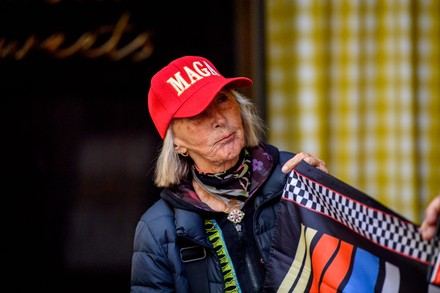
A fresh bout of infighting is spreading across pro-Trump social media spaces after a cluster of viral posts reignited arguments over President Donald Trump, the unresolved Jeffrey Epstein files, and U.S. foreign policy decisions.
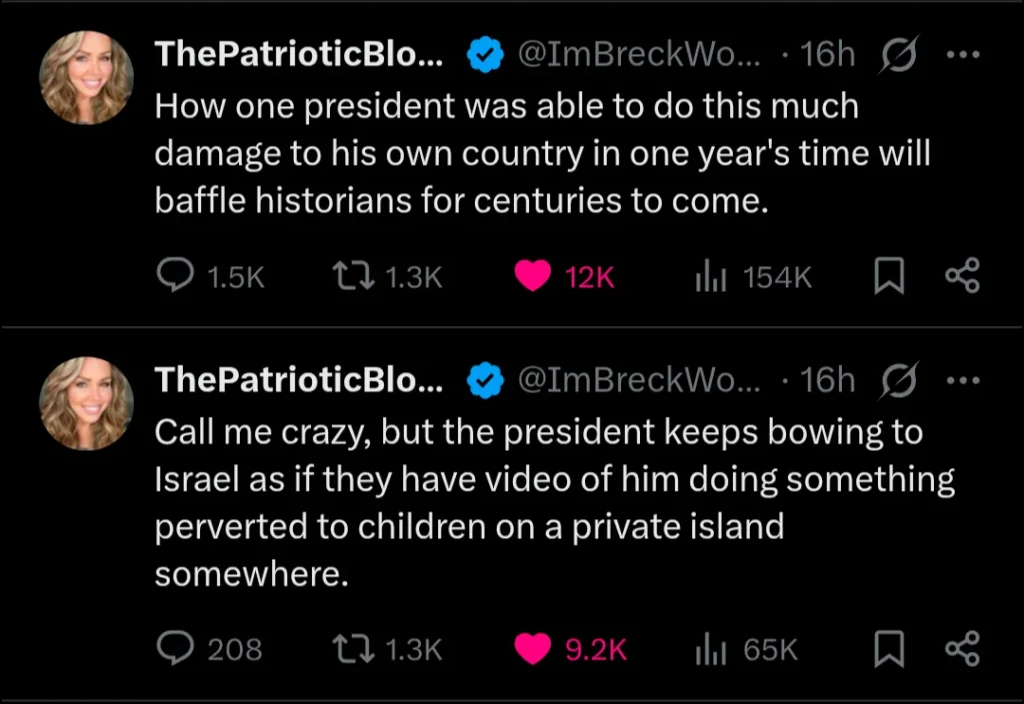
Images shared widely on X show a verified account that is critical of Trump claiming that the harm done to the nation in a single year would “baffle historians.” In another post, the same user argued that the president’s posture toward Israel seemed unusually deferential, suggesting he could be susceptible to outside pressure. That post included an extreme hypothetical involving blackmail, though no evidence was offered to back up the suggestion.
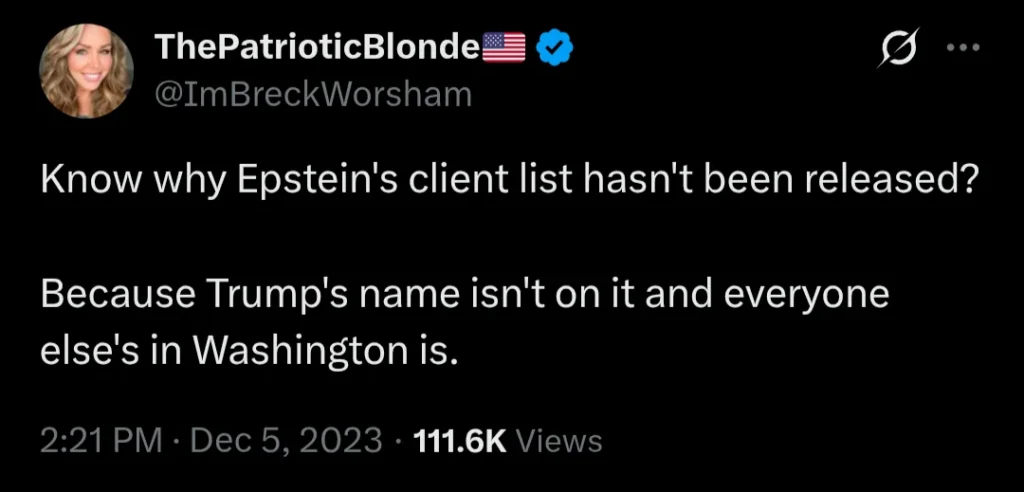
The comments gained traction in part because they appeared to originate from within conservative online communities rather than from long-standing opponents. Some users pointed to the remarks as a sign that even once-loyal supporters are beginning to question Trump’s conduct. Others reacted angrily, labeling the statements irresponsible and accusing the account of pushing conspiracy-driven narratives.
The episode also revived debate over the Epstein files. For years, Trump allies have maintained that the former president’s name does not appear in any incriminating context in publicly released court records tied to Jeffrey Epstein. Still, the renewed online discussion shows some users now entertaining conflicting theories, including speculation that political figures could be compromised by undisclosed material. As with previous claims, there is no public evidence to support these allegations.
Political analysts say the moment reflects a broader shift in online political discourse, where internal rifts are increasingly visible and amplified by emotionally charged posts that blur opinion, speculation, and allegation.
“This is less about facts and more about frustration,” said one digital media researcher who studies political movements. “You’re seeing people who once felt unified around a candidate now expressing anger, confusion, and suspicion toward everyone, including their own leaders.”
With the 2026 midterm election cycle beginning to take shape, the flare-up highlights how unstable political debate remains online, and how quickly unverified claims tied to national politics, foreign policy, and high-profile investigations can spread when they strike an emotional chord with large audiences.