
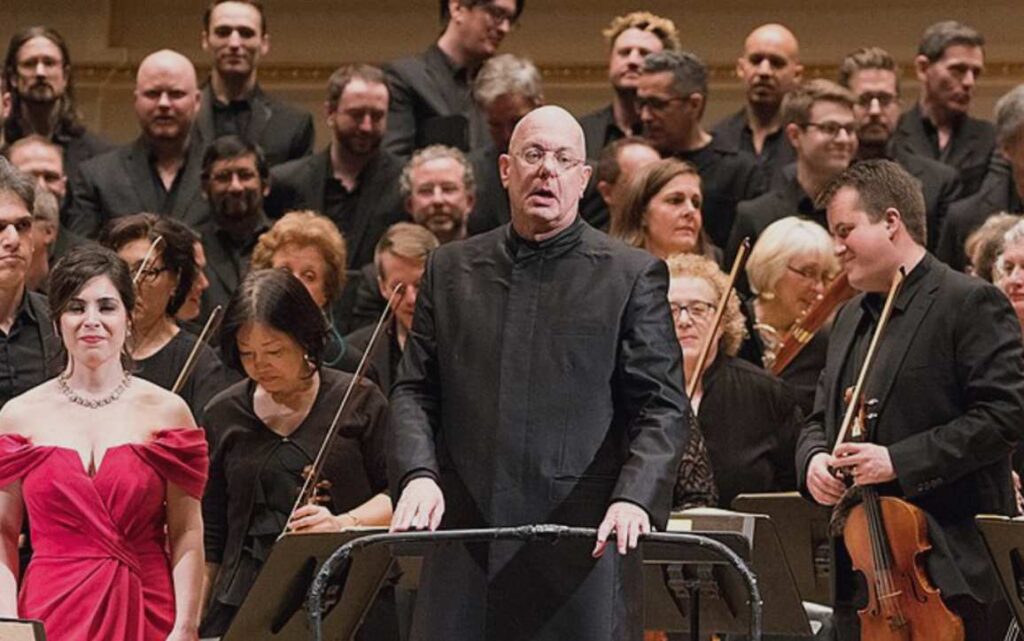
Leon Botstein, the longtime president of Bard College and a prominent figure in classical music, is now under intense scrutiny as newly released Justice Department emails detail his years-long association with Jeffrey Epstein — and the revelations are raising serious questions about judgment and leadership.
For decades, Bard College has been closely tied to Botstein’s identity. His tenure has been widely praised in higher education circles, and his parallel career as music director of the American Symphony Orchestra has cemented his reputation among elite cultural institutions. But the newly disclosed Epstein-related documents threaten to overshadow that legacy.
Botstein’s name appears more than 2,500 times in the Epstein email archive. While many references involve logistical exchanges with Epstein’s assistant, Leslie Groff, emails authored by Botstein himself reveal a tone that critics say goes far beyond routine fundraising — and continued well after Epstein’s 2008 conviction for soliciting a minor for prostitution.
In a 2013 email, Botstein referred to “this new friendship,” even inviting Epstein to tour the Bard High School Early College campus in Queens. In 2018, after Epstein faced renewed public scrutiny, Botstein sent a sympathetic message expressing hope that the financier was “holding up.” The warmth of the language, critics argue, clashes sharply with Epstein’s status as a registered sex offender at the time.
Botstein has insisted the relationship was purely transactional and centered on fundraising. He maintains that Epstein was not a personal friend, despite years of sustained communication. The two also exchanged messages about Vladimir Nabokov, author of the controversial novel “Lolita,” after Epstein donated $125,000 to Bard — a detail that has further fueled discomfort among observers.
“I greatly cherish this new friendship and I have real admiration for how you go about doing things,” wrote Botstein in a March 2013 email.
The decision to invite Epstein to visit a high school campus filled with teenagers has drawn particular outrage. Even if Epstein never accepted those invitations — as Botstein now claims — critics question why such overtures were made at all, given Epstein’s criminal record.
Botstein has defended his conduct as standard fundraising practice, describing the tone of his messages as part of normal donor cultivation efforts.
“My interactions with Epstein were always and only for the sole purpose of soliciting donations for the College,” wrote Botstein. “Mr. Epstein was not my friend; he was a prospective donor.”
“I pursued this development prospect over a span of approximately six years, at a time of economic stress following the financial crisis, in a manner consistent with my practice of sustained communications with donors and potential donors to the College.”
For many within the Bard community, those explanations have fallen flat. Students speaking to the press described the situation as “gross,” saying the emails reveal a troubling willingness to overlook serious misconduct in pursuit of funding.
“He was willing to socialize with a convicted sex offender, just for money that might not even benefit students,” one student told Times Union. “It’s so sad to see someone who we thought was on the right side supporting all of this horrible stuff.”
Two petitions calling for Botstein’s resignation are now circulating online, reportedly signed by students, alumni, parents, and faculty. While Bard College has not yet announced any leadership changes, the mounting backlash suggests that Botstein’s decades-long tenure may now be defined less by artistic achievement — and more by the company he chose to keep.