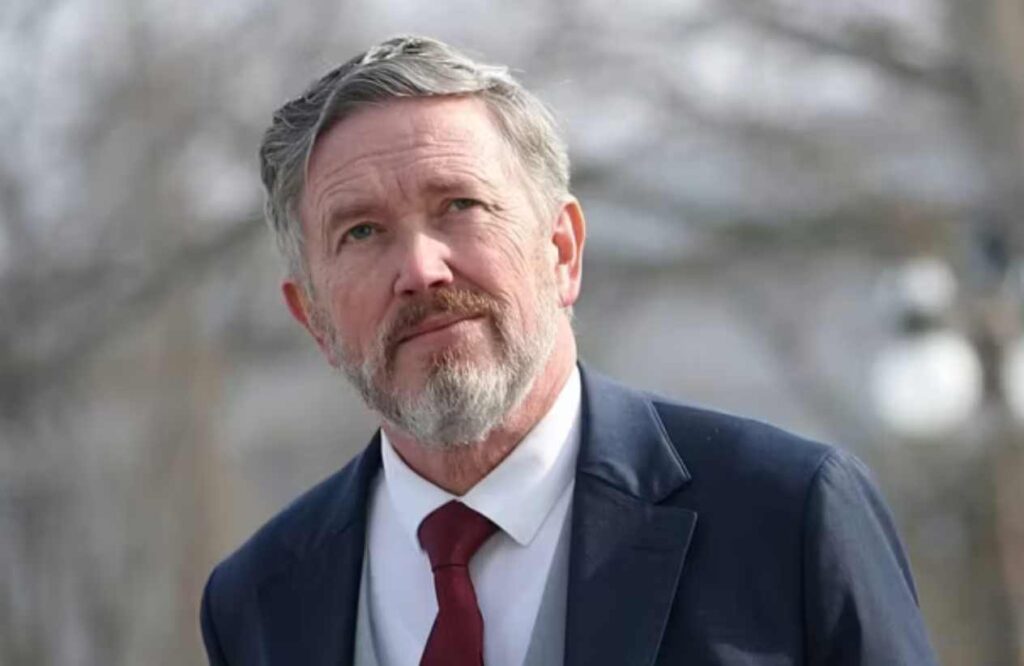
With roughly 3 million Jeffrey Epstein records still withheld from public view and the identities of numerous potential clients and co-conspirators remaining blacked out, Rep. Thomas Massie is warning he may deploy what he has described as a “nuclear option” to compel transparency from President Donald Trump’s Department of Justice.
Massie (R-Ky.), who has been among the most vocal Republicans pressing for the disclosure of files connected to the late convicted sex offender and his influential associates, is set to join Rep. Ro Khanna (D-Calif.) on Monday to examine unredacted versions of the DOJ materials.
Under legislation introduced last year by Massie and Khanna—passed by Congress with near-unanimous support—the DOJ was required to make all related files public in December, prohibiting redactions made solely to shield public figures from embarrassment, reputational damage, or political sensitivity.
However, millions of documents remain unreleased, and those that have been disclosed—including a batch exceeding 3 million pages published late last month—contain extensive redactions.
Rep. Thomas Massie and I have requested a meeting with Todd Blanche to ask why the senders of these emails have been redacted. Concealing the reputations of these powerful men is a blatant violation of the Epstein Transparency Act we passed.
— Ro Khanna (@rokhanna.bsky.social) February 6, 2026 at 2:40 AM
[image or embed]
The released records reference Trump along with other prominent individuals, including former President Bill Clinton, tech executives Elon Musk and Bill Gates, and former British ambassador to the U.S. Peter Mandelson.
Some documents that included potentially damaging references to Trump were briefly posted online before being removed, including a list of unverified FBI tips alleging the president participated in serious criminal misconduct involving minors.
During a Sunday appearance on CNN’s “Inside Politics,” Massie alleged the Trump administration failed to comply with the statutory deadline and criticized the DOJ for disclosing victims’ names while obscuring those of alleged perpetrators.
He pointed specifically to the FBI’s 302 reports—summaries of official interviews with witnesses and victims—which he said the department continues to withhold.
Massie further argued the DOJ is “overredacting” material tied to “some really sketchy emails” between Epstein and associates, adding that “we can’t see who the sender was.”
He noted that Attorney General Pam Bondi “will be in front of my committee,” referencing the House Judiciary Committee, on Wednesday to address questions regarding the document release.
Massie said he intends to press Bondi on why additional files have not been made public, why victims’ names were published despite delays intended to protect their identities, and what specific information has been removed from the records.
When asked by anchor Manu Raju how he would react if the DOJ continued to ignore the law, Massie replied that he is prepared to start reading off the names of Epstein’s clients on the House floor, provided victims “believe that the best way to get justice is to force the DOJ to release these names.”
Massie also addressed disclosures in the most recent document release indicating that Commerce Secretary Howard Lutnick—who had previously stated he severed ties with Epstein in 2005—maintained business and personal connections with him years after Epstein’s 2008 sex crime conviction. The records describe joint ventures, social dinners, and a proposed 2012 trip to Epstein’s private island.
Asked whether Lutnick should appear before the Judiciary Committee, Massie responded, “No, he should just resign.”
He added that Mandelson and former Prince Andrew—another high-profile Epstein associate who lost his royal title—stepped down from their roles “for less than Lutnick lied about.”
Tomorrow I will go to DOJ to view the unredacted Epstein files.
— Thomas Massie (@RepThomasMassie) February 8, 2026
Which docs should I view?
Include EFTA link in reply
I will sort the replies to this post by “number of likes,” so instead of making redundant posts, please “like” replies that contain docs you think are important.
On Friday, amid increasing scrutiny from lawmakers and the public, the DOJ sent a letter to members of Congress—obtained by the Associated Press—advising them that they may review the documents.
Members must provide 24 hours’ notice before visiting and are required to examine the materials in a secure “reading room.” They are prohibited from making electronic copies but may take written notes.
In a social media post on Sunday, Massie encouraged followers to highlight which troubling documents they would like him to prioritize, stating that those receiving the most “likes” would be reviewed first.
Among the records drawing the strongest public reaction and calls for transparency are:
A 2014 email in which a redacted individual thanked Epstein “for a fun night” and remarked that “your littlest girl was a little naughty”;
Another 2014 message in which a redacted individual told Epstein they were granting him “permission to kill” an unnamed person;
A 2009 email in which a redacted individual told Epstein they “loved the torture video”;
And a heavily redacted federal prosecution memorandum sent after Epstein’s 2019 death to then-U.S. Attorney Geoffrey Berman, outlining investigative steps, potential liability of Epstein’s associates, and several unexamined allegations related to complicity in his crimes. That document was later removed shortly after being posted on the DOJ’s website.
Ro Khanna: " Who were the other men who raped these underage girls? Did [Ghislaine Maxwell] have any conversations about a deal with Donald Trump?…She's pleading the Fifth…Why did she not plead the fifth when Blanche asked her questions?" pic.twitter.com/yQWL9OR8JX
— Home of the Brave (@OfTheBraveUSA) February 9, 2026
On the same day lawmakers are scheduled to review the DOJ files, Epstein’s convicted associate Ghislaine Maxwell—serving a 20-year sentence for sex trafficking of minors—declined to answer questions from the House Oversight Committee about additional individuals involved in Epstein’s abuse, invoking her Fifth Amendment right against self-incrimination.
Khanna noted that she did not invoke that right in July when she privately responded to questions from Deputy Attorney General Todd Blanche.
Khanna has since sent a letter to House Oversight Committee Chair James Comer (R-Ky.) listing questions for Maxwell regarding her knowledge of other alleged co-conspirators, the scope of Epstein’s and Trump’s involvement, and whether Trump offered her a pardon in exchange for silence.
“The American people will see that there’s an inconsistency,” Khanna told reporters on Monday. “Why didn’t she plead the Fifth when Blanche asked her questions, but now she’s pleading the Fifth about things that don’t implicate her, but may implicate many of the other powerful people in the Epstein class that committed these crimes?”