
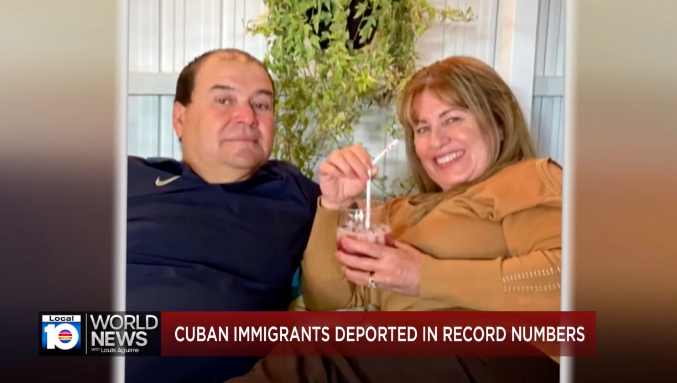
Working long hours in South Florida, Ana says she is overwhelmed by pain and regret. She has not seen her husband, Omar, for 89 days.
The couple arrived in the United States from Cuba by boat 26 years ago. Over time, both became legal residents, their family expanded, and Ana eventually obtained U.S. citizenship.
Omar “always had to work,” Ana said in Spanish, describing why he delayed applying for U.S. citizenship.
That decision came back to haunt the family after a traffic stop and a marijuana possession charge in 2020 led to a deportation order.
Ana last saw Omar in November. He disappeared after attending a meeting with U.S. Immigration and Customs Enforcement officers in Miramar.
“They took him to Alligator Alcatraz,” Ana said, noting that the family has been living in constant distress because Omar has diabetes and had been recovering from an amputation just days before ICE took him into custody.
Earlier this week, a federal judge heard testimony from men who said they were detained at Alligator Alcatraz, where they alleged inhumane conditions and claimed they were punished for attempting to seek legal counsel before being deported.
Florida Gov. Ron DeSantis has not directly addressed the allegations.
“If you don’t have a right to be here, we should determine that quickly and finally and then repatriate you to your home country,” DeSantis recently said at a news conference.
Immigration advocates have also pointed to deaths in custody. ICE reported online that during fiscal year 2025, at least 18 people died nationwide while being held by the agency, with six deaths reported so far this year.
Ana is now working to cover her husband’s legal expenses, saying she fears for his life while grappling with guilt.
“I voted for Trump,” she said, adding that she regrets her decision, saying the current immigration crackdown is not what she believed she was supporting. ICE did not respond to a request for comment for this report.