US President Donald Trump has rolled out a long-promised US$12 billion farm aid package meant to help farmers caught in the crossfire of his own US-China trade fights, insisting that his tariff approach made the bailout possible and even claiming that negotiations had brought back massive soybean purchases from Beijing.
But the reaction from many farmers has been far from celebratory. With prices still low and markets damaged, several said the package arrives far too late and would never have been needed if Trump hadn’t imposed sweeping tariffs in the first place. John Bartman, an Illinois soybean farmer, called the aid a “drop in the bucket” and noted it was “roughly the same amount of money that China would have purchased in a normal year anyway”.
“It’s just the stupidity of the whole situation that we’re in this mess. And why is China not upholding their end of the bargain? Why do we have to have this payment in the first place?” he said.
Agriculture Secretary Brooke Rollins stated that US$11 billion will be issued as direct “bridge payments” to crop farmers by late February 2026, with the remaining US$1 billion reserved for speciality growers.
While repeatedly blaming Joe Biden for what he called a “total mess” and “highest inflation”, Trump insisted the bailout “would not be possible without tariffs” and described the US$12 billion as “a lot of money”. He argued that the levies were generating “hundreds of billions of dollars,” claiming some of it was being redirected to farmers because “they were mistreated by other countries for maybe right reasons, maybe wrong reasons.”
Trump also referenced an ongoing lawsuit challenging his tariffs, calling the plaintiffs “bad people” and “some real sleazebags”. The Supreme Court heard arguments in November on whether the president can impose sweeping tariffs through a national emergency declaration under the International Emergency Economic Powers Act. A ruling is expected in early 2026.
Trump did not clarify whether tariff revenue would fully fund the bailout. If the Supreme Court rules against him, he may be blocked from using tariff income altogether.
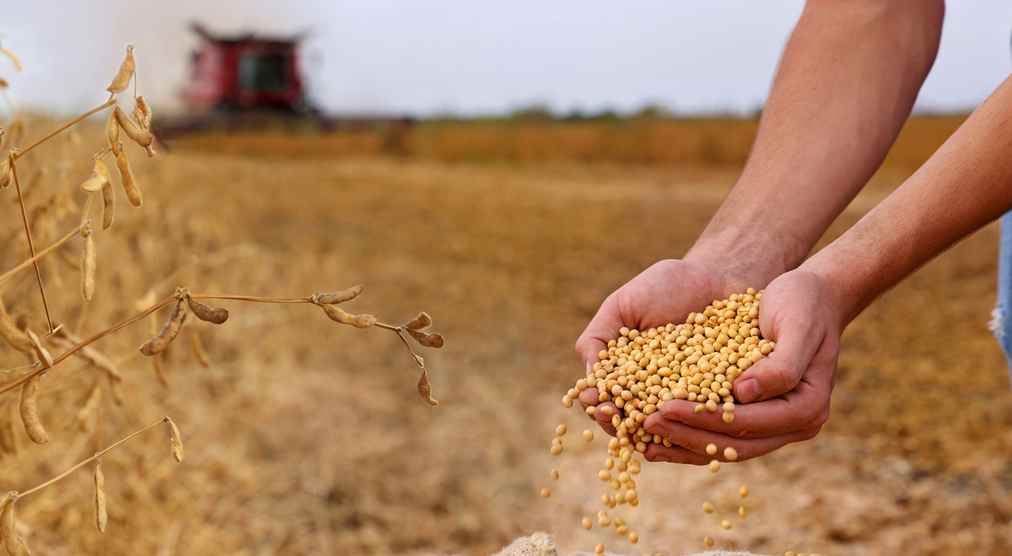
The new aid follows months of anger from farmers after losing the Chinese market because of Trump’s tariff escalations. China, the largest buyer of soybeans worldwide, sharply reduced US purchases and shifted heavily to Brazil. When Trump reignited the trade war earlier this year, Beijing stopped buying entirely until October.
Despite the White House claiming China had agreed to buy 12 million metric tonnes this year and 25 million tonnes annually for three years, Beijing has not confirmed the figures, and orders remain minimal. Still, Trump said China was buying “a tremendous amount of soybeans” and insisted Beijing was “going to do more” than promised.
Treasury Secretary Scott Bessent, who has led talks with China, admitted that discussions with Xi Jinping have largely centered on a single issue: soybeans. “We don’t talk about geopolitics. We don’t talk about trade. It’s about soybean,” he said.
Iowa farmer Cordt Holub praised the package at Trump’s announcement, calling it “Christmas early for farmers.” But many others rejected that framing. Arkansas soybean farmer Randal Shelby labeled the plan “a slap in the face,” saying, “Our bills are past due and due now, all due to their actions.” He argued that the money will be “divided up among all other crop farmers that don’t have anything to do with soybeans.”
Shelby, who voted for Trump, warned that soybean and rice growers have been hit hardest and that the crisis is pushing many toward bankruptcy. He noted high fuel costs, higher interest rates and weakened Chinese demand as major pressures, adding, “It’ll be bankrupting all. And I mean, there are so many of us that are on the fence on that right now.” Gas prices, despite Trump’s claims, have remained above US$3 per gallon since 2021.
Joe Maxwell, co-founder of Farm Action, said the US$12 billion “is only a fraction” of the losses caused by years of tariff battles and volatile markets. He said the country needs long-term structural reform instead of short-term political bailouts.
Bankruptcy filings among farmers have surged, according to Federal Reserve Bank of Minneapolis data, and the mental health toll in rural communities continues to worsen. Trump attempted to frame his estate tax cuts as lifesaving, saying farmers had committed suicides because they couldn’t protect their land, adding, “They love their farm… they’d end up committing suicide, a lot of suicides.”
But recent projections show no meaningful relief ahead. The American Farm Bureau Federation estimates massive 2025–26 losses: US$15.1 billion for corn, US$6.7 billion for soybeans, nearly US$5.9 billion for wheat, and US$3.4 billion for cotton. Sorghum and rice farmers are also expected to lose over US$1 billion each.
USDA data shows farm production expenses climbing to US$467.4 billion in 2025, a US$12 billion increase over last year. The American Soybean Association expects growers to lose about US$89 per acre in 2025 — the third straight year of market losses.
Shelby noted that even if China buys the promised amount by February, “it won’t help” because farmers must sell by November to pay their bills. He also blasted the recent US$20 billion bailout to Argentina, saying, “Why does it have to take so long to attempt to help your taxpaying Americans when it only takes two seconds for them to throw 40 billion in Argentina without a vote or a congressional hearing?”
Jeff Winton, founder of Rural Minds, said he doubts the package is “enough and I’m not convinced it’s in time,” adding farmers will take the aid only “because it’s a matter of survival right now.” He said the farm community is “very divided” on Trump and blamed the current crisis directly on his first-term policies.
Winton described the pattern as a kind of political “Stockholm syndrome,” saying, “So, all of a sudden, the person who hurt you is now your hero… you forget what caused your issue, but you’re so grateful for the relief and the love that you’ve been shown that you forget what caused this issue.”
Full article on SCMP