
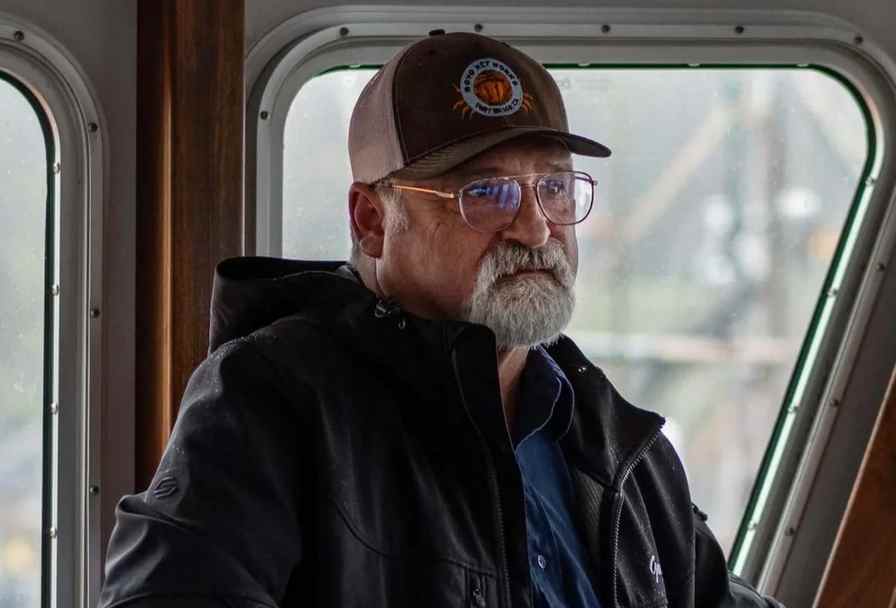
After a fishing vessel overturned in 1985 near Yaquina Bay, Ore., killing three people because help arrived too late, the Coast Guard placed a rescue helicopter there to prevent similar tragedies. When the Obama administration attempted to relocate that helicopter to North Bend in 2014, local residents went to court and Congress stepped in, requiring the Coast Guard to provide extensive notice and justification for any move — even temporary ones for maintenance.
So when talk circulated recently that the helicopter had disappeared, many fishermen brushed it off, the New York Times reported, mostly because the notion sounded absurd. Flights from North Bend can stretch to an hour or more.
“It’s mind-boggling that the decision was made to move this helicopter, but it’s just as mind-boggling that nobody bothered to talk to us about it,” said Taunette Dixon, a leader of the nonprofit Newport Fishermen’s Wives. “I don’t understand why the approach has to be adversarial here.”
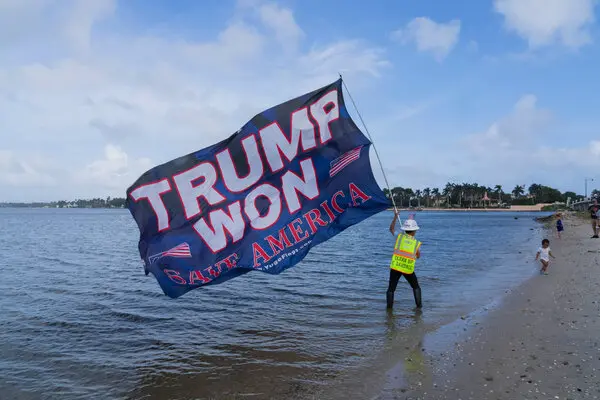
Not long after President Donald Trump took office, local companies began receiving inquiries about whether they could provide basic services — like water and waste management — to what was believed to be a new Immigration and Customs Enforcement detention center at the airport. According to the Times, other Coast Guard properties, including Staten Island, are similarly being eyed for potential ICE use.
But diverting coastal rescue assets is a major issue in a region known for its hazards.
“The shoreline is notorious for king tides, sneaker waves and storm surges that can sweep people off beaches or jetties,” reports the Times. “To reach commercial crab grounds and offshore fishing runs, boaters must cross the Yaquina Bay bar, where the Yaquina River, on Newport’s southern edge, meets the Pacific Ocean. Along the bar, swells, tidal currents and shifting sand create an obstacle course of steep, breaking waves that challenge even Coast Guard rescue boats. Water temperatures off Newport average 50 degrees to 54 degrees, and the Pacific Northwest crab fleet has a higher fatality rate than crabbers more than 1,000 miles north in the Bering Sea.”
“Bar crossings are the most dangerous portion of operating a fishing vessel,” said Amelia Vaughan, a commercial fishing safety expert with Oregon State University and a board member of the Newport Fishermen’s Wives. “Having close, easy response times from the Newport air facility can be the difference between life and death.”
The Trump administration declined to comment directly on the helicopter issue, instead dismissing concerns by calling the notion that rescue efforts are being slowed “an insult to the hard, heroic work the men and women of the Coast Guard put in every day.”
Even so, Dixon recounted that a Coast Guard official in Newport grew emotional as he explained that he could not answer that same question with either a ‘yes’ or ‘no’.
Gary Ripka, a crab fisherman who supported Trump and likes his focus on tightening the southern border, said he is still outraged that his own safety is now at risk because of diverted resources.
“It makes you question yourself: Is this what I voted for?” Ripka said. “It just doesn’t seem like these are decisions about the people who live and work here.”
Read the New York Times article at this link



Shocking disregard for lives. Ask Venezuelan fishermen how they feel about Trump’s policies. Oh you can’t, they’re dead.
Ignorant Bigot voted for ignorant bigot reasons, is STUNNED to find out his Fascist Drag King also hates him, the Ignorant Bigot.
I’d think really hard before interpreting this article…Many facts are missing so look deep before you wonder.