
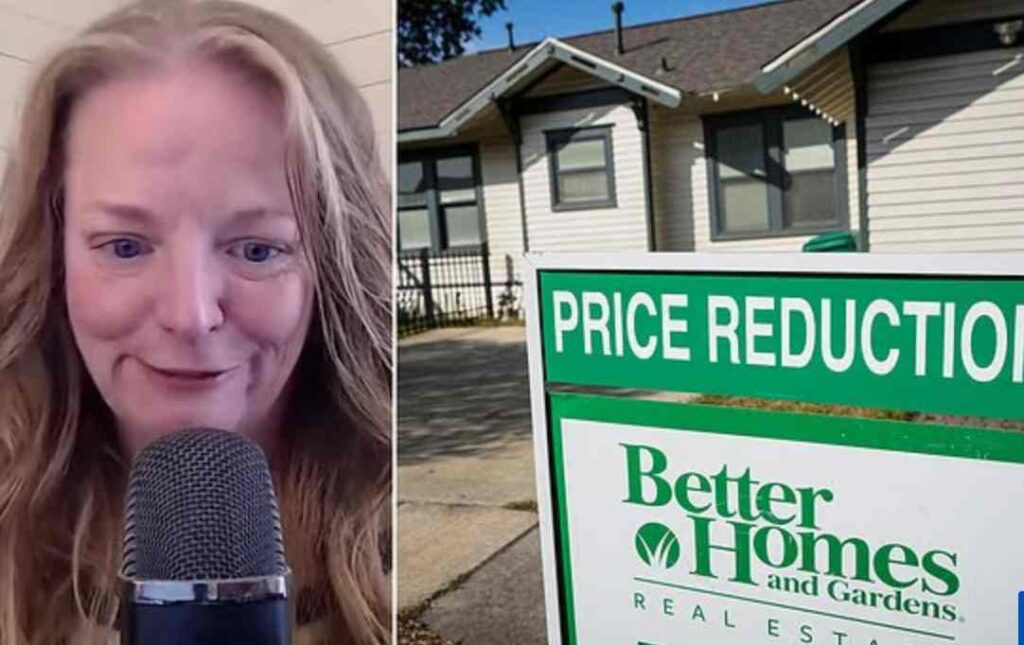
Melody Wright — a housing-market analyst — has recently warned reporters that home prices could tumble by as much as 50% beginning next year. She cautions that this may develop into a prolonged downturn, one that could end up deeper than the last major housing collapse.
Wright believes the next several years could bring home values back to a point where median household income is in line with the median home price — something she considers a baseline “fair value.”
Her outlook is driven by a combination of rising inventory, weakening demand, persistently high interest rates, and a breakdown in affordability — particularly across overheated Sunbelt regions that surged between 2020 and 2022.
Across the broader housing landscape, more than 53% of homes nationwide have lost value over the past year — the highest share since 2012. Inventory is rising as buyer interest cools, and in many metro areas, prices have flattened or are showing slight declines. For many prospective buyers, affordability is still out of reach, with high taxes, insurance, maintenance expenses, and elevated borrowing costs discouraging both first-time and lower-income buyers.
Wright argues the market is already moving through a “slow bleed” — median prices appear steady because high-end transactions are holding up overall averages, but underlying demand and lower-tier home sales continue to weaken.
A drop of 50% in home values would erase trillions of dollars in household real-estate wealth. That puts pressure on homeowners — especially recent buyers with high leverage — and could spark a rise in mortgage defaults, with fallout for banks, mortgage-backed securities, and consumer credit markets.
Homebuilders, construction firms, building-materials suppliers, and residential REITs also face risk. A sharp pullback in new-home demand could trigger layoffs, inventory write-downs, and softer revenues throughout those sectors.
Lower real-estate wealth may also weigh heavily on consumer spending. Many households treat home equity as a form of financial security, and a deep price correction could hurt confidence and reduce major purchases such as renovations, appliances, furnishings, and other big-ticket goods — impacting retail and consumer-durables businesses.
Market watchers are already focusing on the implications for options and volatility. Credit-sensitive stocks, financial institutions, mortgage lenders, and REITs could see increased put activity as downside risks build. Volatility-based instruments may become appealing hedges. Traders are monitoring straddles or strangles on housing-related names for sudden moves tied to price drops or macro shocks, while temporary rebounds, distressed sales, and metro-level fluctuations may create short-term trading opportunities.
Analysts say key indicators now include national and regional home-price indexes, mortgage-delinquency trends, refinancing activity, builder inventories, backlogs, housing-related equities, REIT options flow, and consumer-credit and sentiment data — since stress in real estate often precedes broader pressure on consumers.
While the 2008 crisis stemmed from subprime lending and complex debt products, Wright notes that this scenario is different: the current threat is tied to valuation declines, affordability failure, and debt strains on households and investors. Even with lower overall leverage, the scale and geographic reach of the correction could make the downturn wider.
If falling home prices spark a rise in defaults and tighter credit conditions, the effects could spread through banks, credit markets, consumer spending, and even pension funds and insurers holding mortgage-linked securities.
If home prices do decline by up to 50%, Wright says this would not be a routine correction — it could signal the end of the post-pandemic housing surge. For homeowners, investors, and credit markets, that would mean volatility, uncertainty, and financial stress. For traders following market flows and volatility, it could become one of the most active trading environments seen in years.